Back to work
Case study / 2026

Figa

SaaS product designed and built to make recurring expenses, payment status and cashflow pressure visible before problems hit.

Figa shows product strategy, UX and full-stack SaaS development around a narrow financial workflow: recurring obligations. The product turns rent, subscriptions, installments and team commitments into a planning view users can act on.

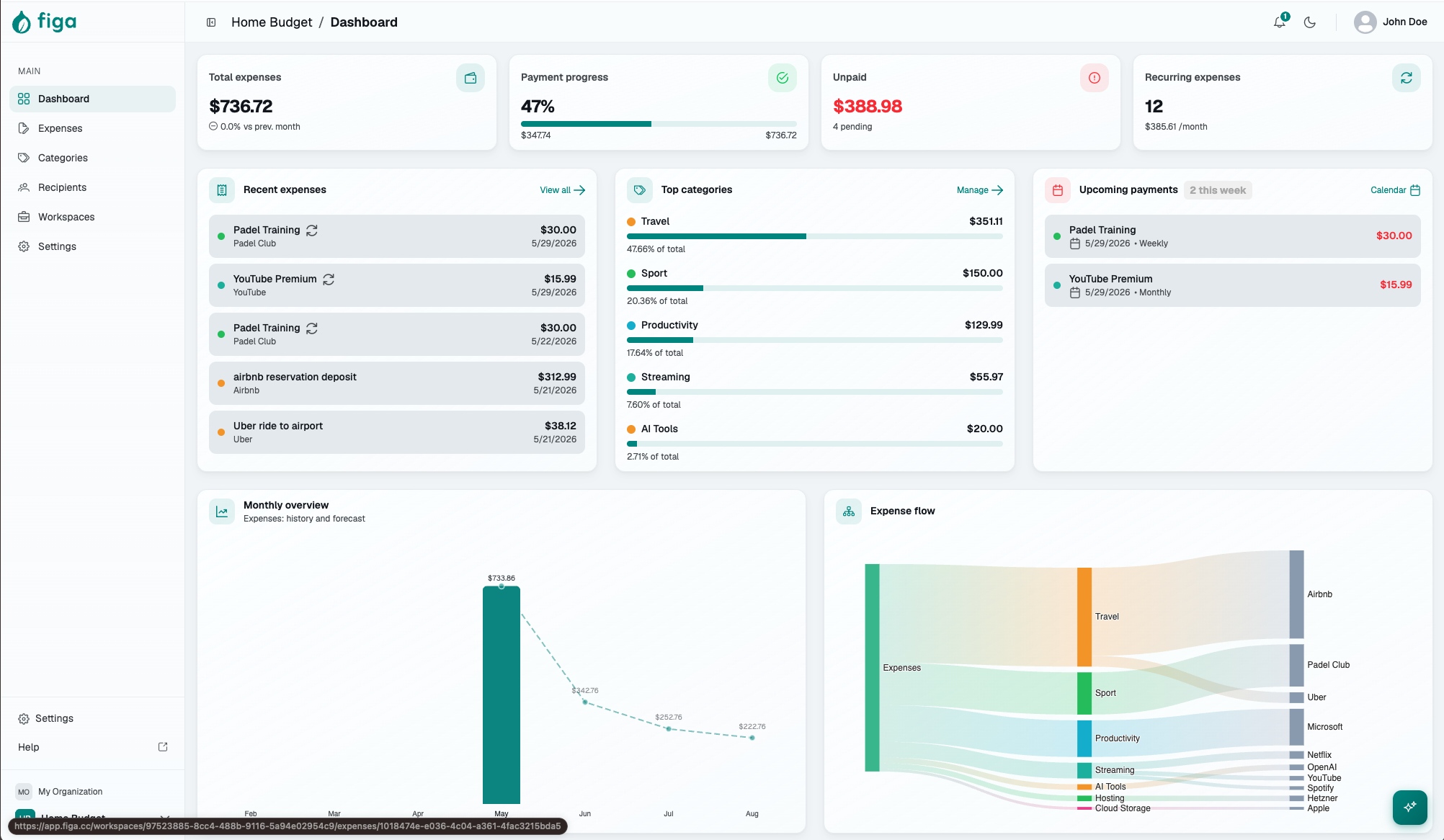
Figa dashboard showing recurring expenses, upcoming commitments, categories, monthly overview, and expense flow
Figa product dashboard

Type

Owned SaaS product

Role

Strategy, UX, build

Focus

Recurring planning

Live

getfiga.com

Context

A finance product built around what happens next.

Most finance tools push people into daily transaction logging. Figa starts from a narrower product thesis: recurring obligations create the most predictable pressure, so the interface should make that pressure visible before the account balance changes.

Experience

One screen for monthly pressure.

The product centers on a dashboard that combines paid progress, unpaid load, recurring volume, upcoming payments, recent expenses, category breakdowns, and a forecast window. The goal is fast orientation, not decorative analytics.

System

Automation-ready without hiding the core workflow.

AI, attachments, CSV import, and API keys sit around the recurring engine as speed layers. The core workflow still works without them: schedule obligations, mark payment status, review pressure, and understand where money is moving.

Product decisions

The product was deliberately narrowed before it was expanded.

Forward visibility over bookkeeping

Figa avoids competing with general expense diaries. It prioritizes scheduled obligations, due states, and forecasted pressure because that is where users can act before surprises arrive.

Timeline as the system of record

Recurring entries, installments, paid states, overdue states, and skipped occurrences all resolve back to one timeline. That keeps planning predictable as the workspace grows.

Dashboard pressure over vanity charts

The dashboard favors operational numbers: total pressure, unpaid now, paid progress, recurring monthly volume, upcoming payments, and category-to-recipient flow.

Integration surface from the start

API keys and automation paths make Figa useful beyond manual entry, while the core product stays understandable for people who never connect an external tool.

Delivered surface

A live product with a clear product spine.

  • Recurring expenses with schedules, due dates, cycles, and upcoming payment views.
  • Paid, unpaid, overdue, installment progress, and skipped occurrence handling.
  • Monthly pressure dashboard with totals, recent activity, categories, and forecast context.
  • Advanced paths for AI-assisted edits, receipt and invoice extraction, CSV import, and API automation.

What made the project demanding

The demanding part was turning a narrow financial habit into a product system that stays practical as data grows. Figa needed a clear recurring engine, readable payment states, and a dashboard that helps users understand pressure without forcing them into daily bookkeeping.

Ready to move

Let's build a system
that works after launch.

Tell us what you want to build and where your website, product or process is slowing you down. On a short call, we will decide what is worth building first.

Book a 30-minute call

Prefer email? hello@devnity.com